
Buying a Home in Fenwick Old Saybrook: What to Know
August 27, 2026
August 27, 2026
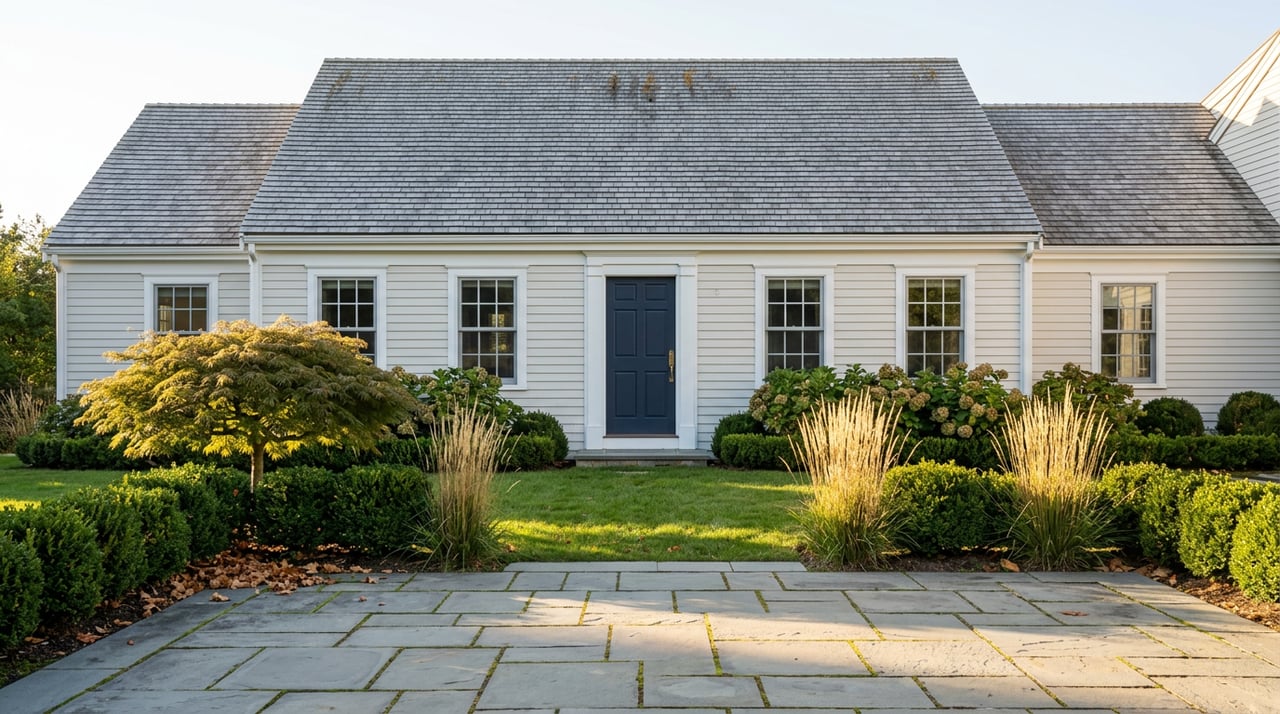
Say you close on a cottage in Fenwick in May. The inspection flagged original single-pane windows, the roof has a decade left in it if you're generous, and the patio needs to be torn out and reset before you can host anyone on it. You've budgeted the summer for exterior work and you're planning to move in around Labor Day, windows replaced, roof done, patio poured.
Here's the problem. The government you just moved into doesn't let you build anything, on most of the days you were counting on, for most of the summer you were counting on.
Fenwick is not a subdivision or a homeowners association layered on top of Old Saybrook. It is its own municipality, created by a Special Act of the Connecticut legislature in 1899, and it runs on its own calendar, its own tax roll, and its own permitting rules that most buyers never hear about until they're already under contract. The 195 acres east of the Old Saybrook town line come with a second layer of government that shapes what you can build, when you can build it, and how much you'll pay to own it. That is the part a listing sheet never mentions.
The Borough of Fenwick has its own elected government. A Board of Warden and six Burgesses run the borough, elected every odd-numbered May, alongside an elected Treasurer, Clerk, and Tax Collector. The borough also employs its own Manager, Business Manager, Zoning Enforcement Officer, and Building Official, none of whom report to Old Saybrook.
Underneath that elected board sit six appointed commissions that do the actual work of regulating property:
Every one of those bodies has to sign off on things a buyer in most other Old Saybrook neighborhoods would clear through a single town office. If you are used to one zoning department and one building inspector, budget more time. Fenwick has both, and they are not the same offices you would reach by calling Old Saybrook Town Hall.
Because Fenwick is a political subdivision of Old Saybrook as well as its own municipality, the services a homeowner relies on are split across three different providers. Buyers who assume "Old Saybrook" covers everything end up calling the wrong number more than once.
| Service | Who provides it |
|---|---|
| Police, public schools, volunteer fire, ambulance | Town of Old Saybrook |
| Fire Marshal | Town of Old Saybrook |
| Health and sanitation | CT River Area Health District |
| Property tax bill | Both the Borough of Fenwick and the Town of Old Saybrook, separately |
| Zoning, building permits, historic review, harbor management | Borough of Fenwick |
That last row is the one worth sitting with. A Fenwick property owner receives two separate property tax bills every year, one from the borough and one from the town, on two different schedules set by two different governing bodies. Neither the town's mill rate nor its due dates automatically apply to the borough side of the bill. When you're working out carrying costs on a Fenwick property, ask your closing attorney for both bills, not one, and confirm both are current before you close.
This is the detail that catches buyers off guard most often. A borough ordinance prohibits most construction, alteration, and repair activity in Fenwick on Sundays from Memorial Day weekend through Columbus Day weekend, and blocks it outright, on any day of the week, from July 1 through the first business day after Labor Day. Work is also restricted to the hours between 7am and 7pm year round. The only carve-out is for emergency repairs tied to a public health or safety issue, and only when the Building Official or the Warden specifically authorizes it.
Read that against a typical closing timeline. If you buy a fixer-upper in Fenwick in late spring, hoping to get exterior work done before you move in for the season, you are walking into a window where you legally cannot touch the building for roughly ten weeks. A renovation that would take eight weeks anywhere else in Old Saybrook can stretch across two separate building seasons in Fenwick, because the calendar itself, not your contractor's schedule, is the constraint.
This is not a detail your home inspector will flag. It belongs in the same conversation as financing contingencies and appraisal timelines, and it should happen before you write an offer on anything that needs exterior work, not after.
Fenwick land east of Maple Avenue was designated a local historic district in 1975, and any exterior change on a property inside that boundary, additions, replacement siding, even hardscaping, requires a Certificate of Appropriateness from the Historic District Commission before work begins.
Here is the part that trips up buyers who've done some homework and think they understand the rules. The Borough of Fenwick also sits on the National Register of Historic Places, but the National Register boundary and the local historic district boundary are not the same shape. Most of the houses on Sequassen Avenue, and most of the houses along Wilson Avenue and Old Fenwick Road, fall outside the National Register district even though they sit inside the borough, largely because that stretch is more recent construction. A house can be subject to the local Certificate of Appropriateness process without carrying National Register status, or vice versa, depending on exactly which line it falls inside.
If you're evaluating a specific address, ask the Borough office which district, or districts, the parcel sits in before you assume you know the answer from a general description of "historic Fenwick."
None of this happens in a market vacuum. Current town assessment records show the typical Fenwick property sits on about 1.52 acres, was built around 1971, and runs close to 2,989 square feet, with roughly half of homes in the borough used as second homes rather than occupied year round.
Put the governance structure next to those numbers and a pattern emerges. This is not a market where buyers cycle through starter homes and move up every five years. It's a market where owners tend to buy once, hold for decades, and treat the dual tax bill, the summer construction window, and the Certificate of Appropriateness process as the price of admission to a place that has deliberately made itself hard to alter. The low turnover that keeps Fenwick inventory tight isn't just about desirability. It's what happens when a place makes renovation slow and permitting layered on purpose, and the buyers who stay are the ones who planned for that going in.
A few questions worth answering before you're under contract, not after:
Does every Fenwick property need a Certificate of Appropriateness? Only properties within the local historic district, which covers Borough land east of Maple Avenue. Confirm the exact boundary with the Borough office rather than assuming based on the address alone, since the local district and the National Register district don't align perfectly.
Can I do interior renovation during the July 1 to Labor Day window? The ordinance's language covers construction, alteration, and repair broadly, not just exterior work, so don't assume interior projects are automatically exempt. Confirm the scope of any planned work with the Borough's Building Official before you schedule contractors.
If something goes wrong with my furnace or my septic in July, am I stuck? The ordinance allows emergency repairs tied to a public health or safety issue, but only when specifically authorized by the Building Official or the Warden. Get that authorization in writing before work starts, not after.
Fenwick rewards buyers who do their homework before the offer, not during the inspection period. If you're weighing a purchase inside the borough, or trying to figure out whether a property you love comes with a summer you can't build in, Teri Lewis has spent years working waterfront transactions across the Connecticut Shoreline and can walk you through exactly what a specific Fenwick address will require before you're locked into a closing date. Request a Concierge Consultation to start with the right questions.
Stay up to date on the latest real estate trends.






Teri is extremely personable and will work tirelessly for your needs. Her attention to detail and her honest and personable approach is what she longs for each in every transaction. She will not only find you a home, but will also help you find the right fit for your family and also give you a concierge approach when transitioning into the area she so loves.